

After Extraction of Wisdom Teeth
Options for removal of wisdom teeth include local anesthesia, laughing gas (nitrous oxide/oxygen analgesia), or intravenous anesthesia. Many patient who need all four wisdom teeth removed elect to have intravenous anesthesia for the most comfortable experience. These options, as well as the surgical risks (i.e., sensory nerve damage, sinus complications), will be discussed with you before the procedure is performed. You may or may not require sutures. If sutures are placed, they will be dissolvable. To help stop bleeding from the extraction sockets, you will bite down on the gauze placed in your mouth. You will rest under our supervision in the office until you are ready to be taken home. Upon discharge your postoperative kit will include postoperative instructions, gauze, and any prescriptions you will require post operatively. These may include prescription pain medications, antimicrobial mouth rinses or antibiotics. If you have any questions, please do not hesitate to call us at West Hartford Office Phone Number 860-231-1030.
Our services are provided in an environment of optimum safety. We utilize modern monitoring equipment and our staff are experienced in anesthesia techniques.
What will I feel like after wisdom teeth removal surgery?
On the first day after wisdom teeth removal surgery, you will experience some bleeding for the first few hours. You will be provided extra gauze and instructions on how to use them to control bleeding at home. You should cover your pillowcase with something so that you don’t get any blood on it. You can expect to have some pain and swelling after removal of your wisdom teeth. Each individual’s reaction to surgery varies, and the sensation of pain can range from mild discomfort to severe pain. A variable amount of swelling can be expected following the surgery. This swelling usually peaks on the third day and should begin resolving slowly after that. You can limit the amount of swelling you will have by using ice for the first 48 hours. The more ice you use the first day, the less swelling you are likely to have on the second day. Please remember to put ice on the first day even if it is somewhat uncomfortable to have the cold next to your skin. After surgery, you may notice that your jaw muscles are stiff, and it is difficult to open your mouth normally. You can apply moist heat to your face after a week which will allow your muscles to relax more and open wider. Most of the time you will want to limit your activities for a few days. We ask that you follow your post-operative instructions closely. Doing so will make you as comfortable as possible during the first few days following your procedure. Please allow time for your body to begin healing before resuming an active social, academic, or athletic schedule. Most patients feel like they are over the hump and on their way to recovery in 4-5 days.
Are there any problems after the extraction of wisdom teeth?
As with any medical procedure, there can be complications. Some complications that patients undergoing wisdom tooth extraction may experience include:
- damage to the sensory nerve that supplies sensation to the lips and tongue
- sinus communication
- infections
- dry sockets
Other temporary problems you may experience in the post-operative period include stiffness of the jaws, chafing around the corners of your lips, facial bruising, and blood oozing from the extraction sites. The post-operative instruction sheet we will provide should answer many of the questions related to these more common concerns.
After the procedure, our assistants will review your post-operative instructions with your escort. We ask that you follow these instructions closely, as they will make you most comfortable following your procedure. If you were sedated, you will be comfortable and drowsy when you leave the office. Most patients prefer to go home and rest with no other physical or scholastic activities planned for a few days. With any medical procedure, there can be unexpected results. These can include delayed healing, infection and post-operative numbness or tingling in your lip, chin, or tongue. Drs. Gady, King or Beauvais will review relevant post-operative events with you and answer any questions during your office visit.

Damage to Sensory Nerve:
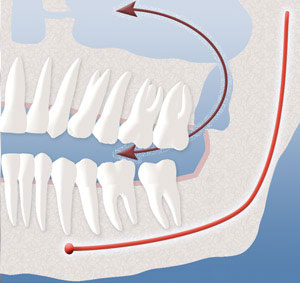
A primary concern is a nerve within the lower jaw bone that supplies feeling to the lower lip, chin, and tongue. This nerve is frequently very close to the roots of the lower wisdom teeth. Having these teeth removed between the ages of 15 and 18 is ideal because the roots have not fully develop and so the nerve is not as close to the roots of these teeth. Occasionally, when the teeth are removed, and especially in older patients, the nerve can become injured. When local anesthesia wears off, you may experience a tingling or numbing sensation in the lower lip, chin, or tongue. Should this occur, it is usually temporary and will resolve gradually over a period of weeks or months. On rare occasions it can result in a permanent alteration of sensation similar to having local anesthesia. We feel that you should be aware of this possibility before consenting to surgery.
Sinus Communication:
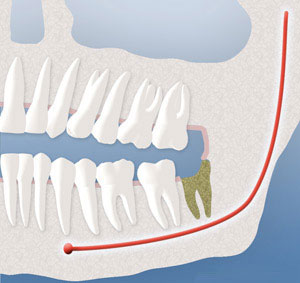
The upper wisdom teeth are situated close to your sinuses, and their removal can result in an opening between your mouth and the sinus. Once again, if the teeth are removed at an early age, the root formation is minimal, and this complication is very unlikely. However, if it does occur, it will usually close spontaneously, but we may give you special instructions to follow, such as avoid blowing your nose for two or three days following the surgery. You can wipe your nose, but don’t blow your nose. If you have to sneeze, you should sneeze with an open mouth into a tissue. Pressure should not be created in the sinus area, which may dislodge the healing blood clot. If you sense this condition occurring after the surgery, please contact the office. An additional procedure may RARELY be necessary to close the opening.
Dry Sockets:
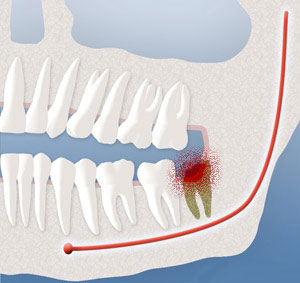
Dry sockets continue to be the most common problem people experience following dental surgery. They arise due to premature loss of a blood clot in the empty tooth socket. This seems to occur with greater frequency in people who smoke or are taking birth control pills. They usually occur in the lower jaw on the third to fifth day after surgery. They cause a deep, dull, continuous aching on the affected side(s). Patients may first notice the pain starting in the ear radiating down towards the chin.
The symptoms frequently begin in the middle of the night, and your pain medication regimen may not help. Treatment can involve changing your prescription. Occasionally it is helpful to place a dissolvable medicated dressing in the empty tooth socket. This will help decrease the pain and protect the socket from food particles. The effectiveness in alleviating the pain lasts for 24-48 hours. Occasionally, a second dressing will be placed if pain recurs.
The dressing doesn’t aid in healing. The only reason to place a dressing is for pain control. If medication is controlling the pain, the socket will heal without a dressing. An irrigation device may be provided to help you to keep food particles from lodging in the extraction site.
Infection:
Occasionally, post-operative infections occur. This usually requires an office visit and clinical examination. Many times, just placing you on an antibiotic for one week will take care of the infection. If it persists, the area will have to be drained and cleaned. If you have questions during your post operative course, don’t hesitate to call the office at West Hartford Office Phone Number 860-231-1030.
Ready to Make a Wisdom Teeth Appointment?
Call us with any questions or to make an appointment!